
DDAI + EVIDARY

DDAI establishes the evidence. Evidary keeps it current and verifiable.

DDAI delivers the implementation, operating model, training and initial evidence. Evidary maintains the resulting AI Evidence Passport as the system, approvals and review requirements change.

One company, two commercial motions

Implementation + assurance

DDAI

  • Identifies the problem and intended purpose.
  • Designs the workflow and accountability model.
  • Builds, integrates, assesses or trains.
  • Establishes the first evidence baseline.
  • Delivers a named proof event and handover.
Evidence + verification

Evidary

  • Maintains the system and release record.
  • Connects claims, evidence and approvals.
  • Creates purpose-specific Evidence Passports.
  • Signs approved versions.
  • Supports independent verification.
  • Monitors change and reassessment.

INSIDE EVIDARY

From system record to verifiable evidence.

The screens below show the product workflow behind the commercial boundary: register the system, retain evidence metadata and verify an approved bundle. These representative product views use synthetic demonstration records.
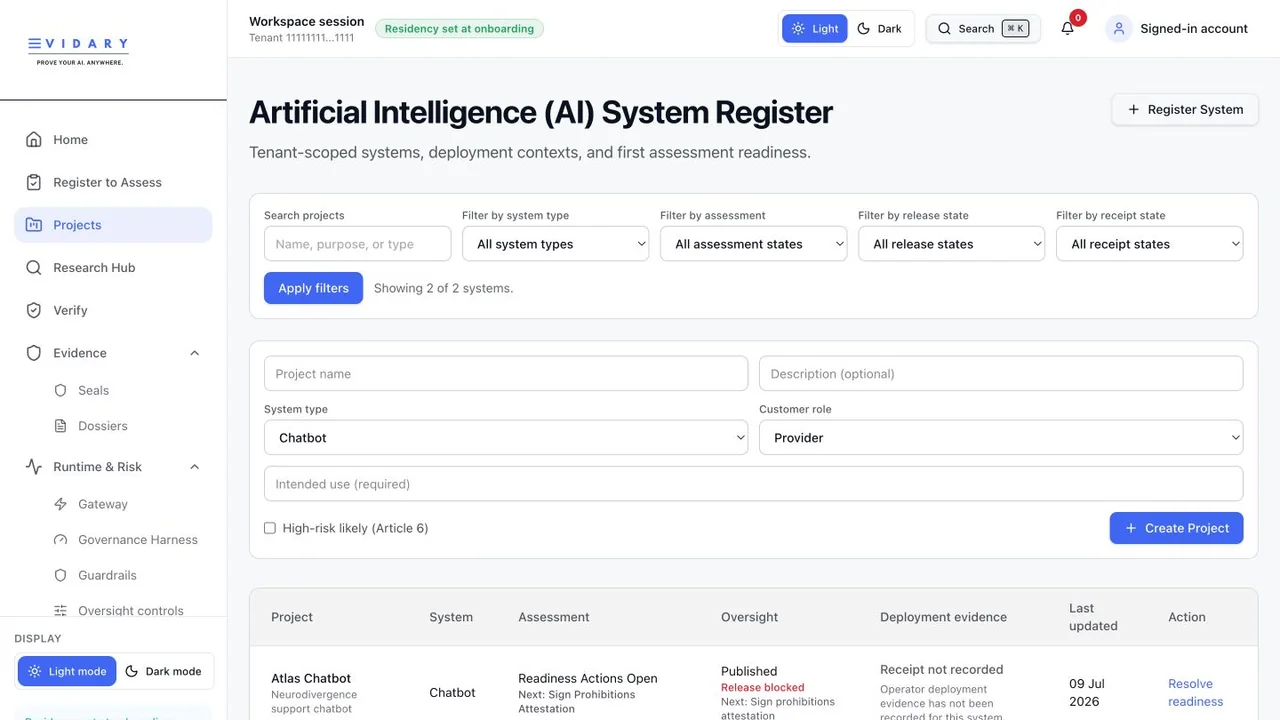
Synthetic Evidary system-register example showing system ownership, review state, and evidence status.
Synthetic product demonstration

Connect the system to its operating state

Maintain intended purpose, ownership, assessment readiness, oversight, and deployment evidence in one synthetic system record.
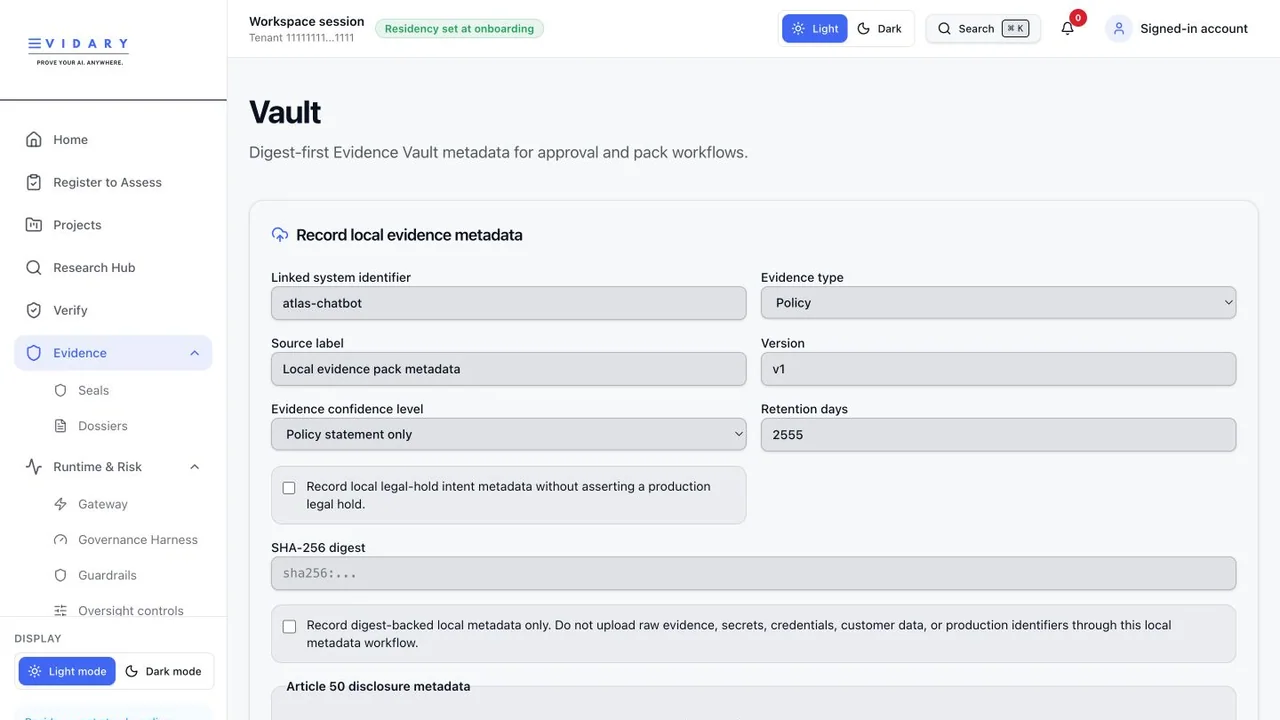
Synthetic Evidary Evidence Vault example showing digest-backed evidence metadata and retention fields.
Synthetic product demonstration

Retain evidence metadata without exposing raw material

Link digest-backed evidence metadata to the system, version, and retention requirements while the underlying files remain controlled.
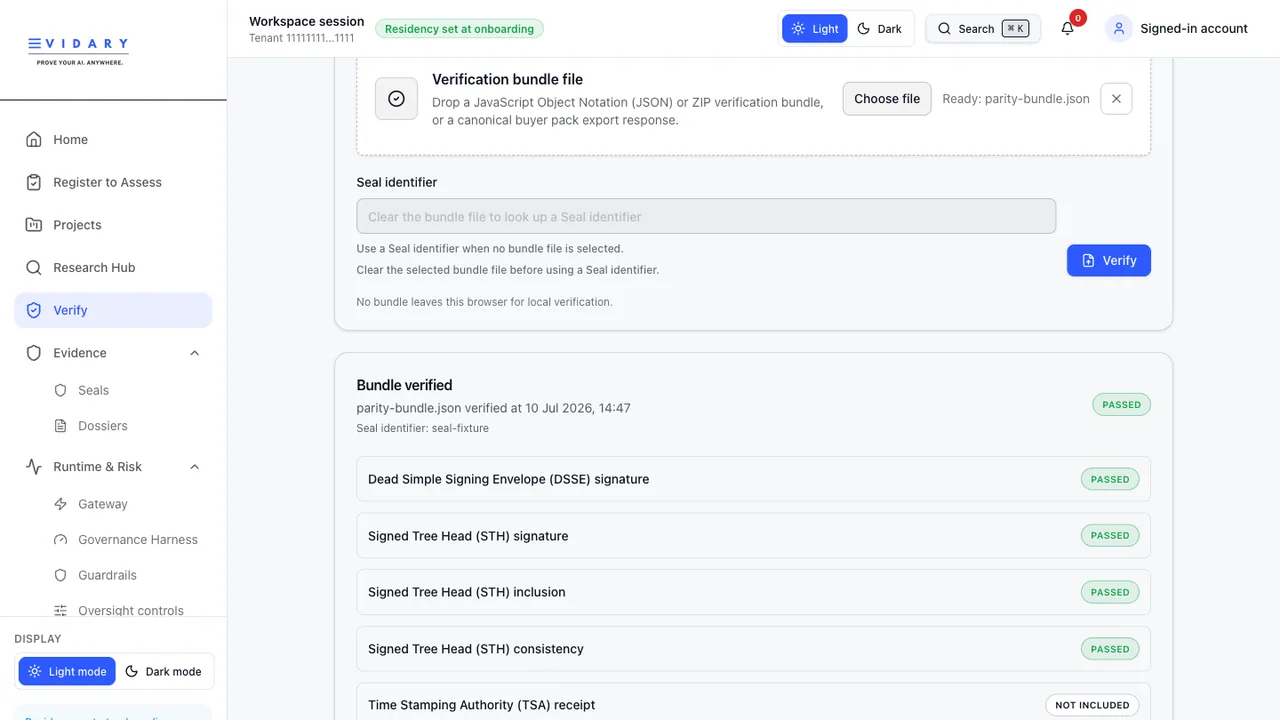
Synthetic Evidary verification example showing a browser-local result for supported proof material.
Synthetic product demonstration

Inspect what the bundle can prove

Inspect the signature and supported proof material included in a synthetic Evidary bundle without uploading the file for verification. The result identifies what was checked, what is missing, and what remains outside scope.

What an AI Evidence Passport shows

  • Which system, deployment and release the record describes.
  • Who owns and approved it.
  • Which review criteria were considered.
  • Which evidence supports the claims.
  • What was excluded or remains unresolved.
  • Whether the included signed record has changed.
  • What happened after a material change.

When Evidary is appropriate

  • A supplier faces repeated buyer diligence.
  • A public body needs a maintained system and evidence record.
  • Several systems need consistent approvals and reassessment.
  • An assurance firm needs repeatable client evidence.
  • A runtime or operational decision needs to attach to the system record.

Not every DDAI project requires Evidary.

DDAI can deliver a bounded consultancy outcome without a software subscription. The work should still leave a clear evidence baseline so the customer can adopt Evidary later without rebuilding the record.

Boundary

Evidary is evidence and verification infrastructure. It does not provide legal advice, certify compliance or replace professional judgement.

Start with one real system and one real review.

Discuss an Evidary design-partner pilot